Muzzle Device Basics: Everything You Need to Know
Outfitting your rifle with a muzzle device is one of the most simple and most affordable modifications to drastically increase performance. Muzzle devices allow you to customize your firearm to better suit your needs, whether that is to increase accuracy, reduce recoil or muzzle climb, reduce flash, or mount a suppressor
Table of Content
What Does a Muzzle Device Do?
A muzzle device changes the firing characteristics of your firearm, usually to reduce recoil and/or reduce muzzle flash. Muzzle devices attach to the threaded portion at the end of the barrel and can adapt your rifle to perform different tasks. You might consider using a 9mm muzzle device to reduce the flash on your pistol caliber carbine (PCC), a 308 muzzle device to make your precision rifle more accurate, or a 300 blackout muzzle device to mount a silencer. You can also pin and weld muzzle devices to your barrel, permanently installing them to increase your barrel length to meet the requirements set by the NFA.
What are the Different Types of Muzzle Devices?
The most common muzzle devices are flash hiders, muzzle brakes, and compensators. Each type of muzzle device plays a different role in customizing your firearm. Flash hiders reduce muzzle flash, muzzle brakes reduce recoil, and compensators do a little bit of both. Depending on how you want your rifle or pistol to feel will dictate which muzzle device is correct for you!
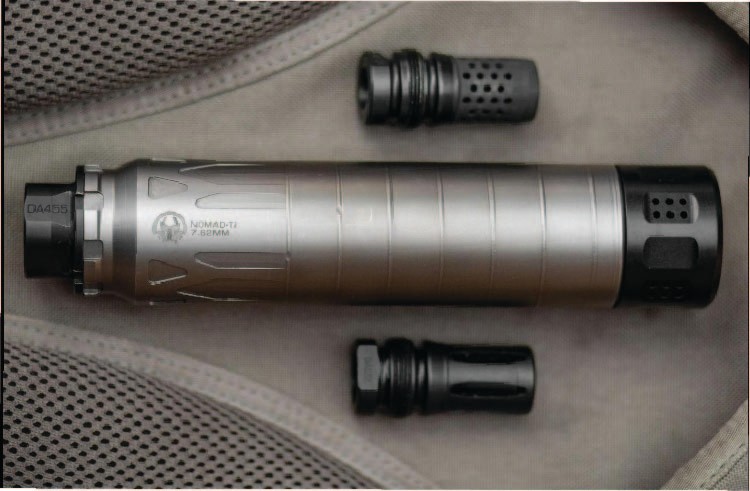
Credit: @deadairsilencers
Barrel Threading
A threaded barrel is required to attach most modern muzzle devices, while most common rifles today like the AR15 and AK platforms have threaded barrels standard, many traditional hunting-style rifles and many handguns may feature a bare muzzle. If your firearm does not have a threaded barrel, you may be able to replace the barrel with a threaded model or have a gunsmith thread the barrel for you. A threaded barrel on your rifle, pistol, or shotgun opens the possibility to use whichever muzzle devices you’d like, including suppressors. Many Powered by Silencer Shop dealers offer gunsmithing services, if you need a barrel threaded check out your local Powered by dealer for assistance.
What Muzzle Device is Best?
Each type of muzzle device plays a different role in optimizing your firearm for a specific task, depending on what you need your weapon to do will determine which muzzle device is best for you. The type of firearm you are using can also play a part in deciding which attachment makes the most sense. The best AK muzzle device is likely the Dead Air Keymo Muzzle Brake, because it is available in unique thread pitches to accommodate European firearms. If you’re looking for the best muzzle device for ar pistols or short-barreled rifles (SBRs) you might want to consider the YHM Mini Phantom QD.Muzzle Brake as it is very short and light. Flash hiders usually make the best 556 muzzle devices as 5.56 and .223 are incredibly flashy rounds. Because 300BLK is optimized for suppressors, the best 300 blackout muzzle device is a suppressor mount such as the SilencerCo ASR Flash Hider, which allows you to easily attach a suppressor to your firearm.
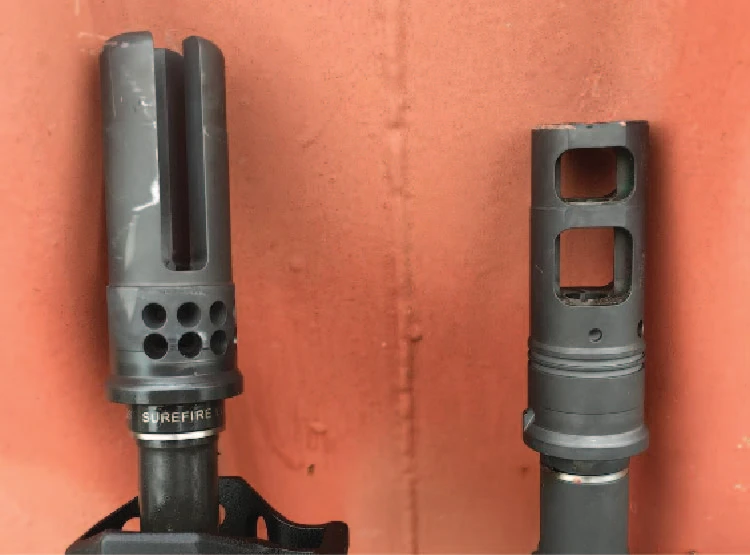
Credit: @surefiresuppressors
Muzzle Brake
Muzzle brakes aid in reducing felt recoil when you shoot. They work by redirecting gases exiting the barrel laterally to disperse the force, instead of the energy creating more recoil. AR muzzle brakes are very common to tame the recoil, mounting a suppressor to your AR15 is also a great reason to use a 5.56 muzzle brake. Muzzle brakes are also effective suppressor mounts because they act as sacrificial baffles, which can help increase the durability and longevity of your silencer.
Flash Hiders
Flash hiders are one of the most popular types of muzzle devices, they are designed to disrupt and disperse unburnt propellant and combustion gases which cause bright muzzle flash. The A2 style muzzle devices were popular AR 15 flash hiders for a long time thanks to their affordability and availability, but more modern designs have become more prolific lately. Today's best muzzle devices feature 3 or 4-prong designs that virtually eliminate muzzle flash in low-light conditions.
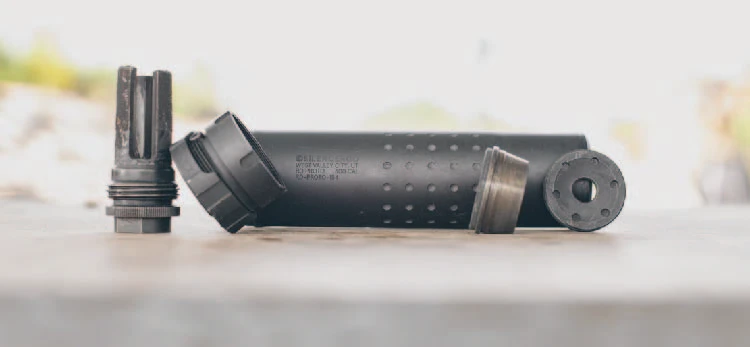
Compensator
Gun compensators are kind of a combination between muzzle brakes and flash hiders, they often use an omnidirectional porting design that disperses muzzle blast and flash. AR compensators, like the Q Cherry Bomb, are the best of both worlds between recoil reduction and flash reduction. Compensators are often easier to install than an ar 15 muzzle brake as well, due to not needing to be precisely timed when installed.
Muzzle Brake vs Compensator vs Flash Hider
If you are looking to upgrade your firearm or are building a new rifle you are probably wondering what muzzle device you should use. If you’re deciding between muzzle brake vs flash hider it usually comes down to when and where you’re shooting, if you shoot indoors or at dusk (like for hunting hogs) a flash hider might be a better choice for you to reduce muzzle flash, but a muzzle break will drastically reduce recoil. If you know you want to reduce recoil and are deciding between muzzle brake vs compensator it is a little less clear. A muzzle brake will provide better recoil control, but a compensator will aid more in flash and muzzle blast, also most compensators do not require timing, so they are much easier to install.