Gun ownership is engrained in American history and culture. Each year more than 20 million firearms are sold, and about 1/3 of those are rifles. With an increasing volume of rifles in the hands of responsible gun owners, short-barreled rifle (SBR) ownership has also soared. SBR ownership is expected to see a historic increase in 2023, spurred on by new cartridges optimized for shorter barreled platforms such as 300BLK, 8.6BLK, and 6ARC, the rising popularity of pistol caliber carbines (PCCs), and ATF pistol brace rule updates.
Table of Contents
What is an SBR?
A short barrel rifle, commonly called an SBR, is a firearm intended to be fired from your shoulder with a rifled barrel length of less than 16”. SBRs were initially defined and regulated by the National Firearms Act of 1934 (NFA) and are currently overseen by the Bureau of Alcohol, Tobacco, Firearms, and Explosives (ATF). An SBR allows for a lighter, more maneuverable rifle which makes them great in certain types of hunting, competitions, and home defense training.
Fun Fact: The original barrel length was set to be 18”, just like shotguns. However, M1 Carbines used in World War II featured a barrel length of less than 18”, so the regulation changed to make these military surplus firearms legal for returning soldiers and citizens purchasing military surplus firearms.
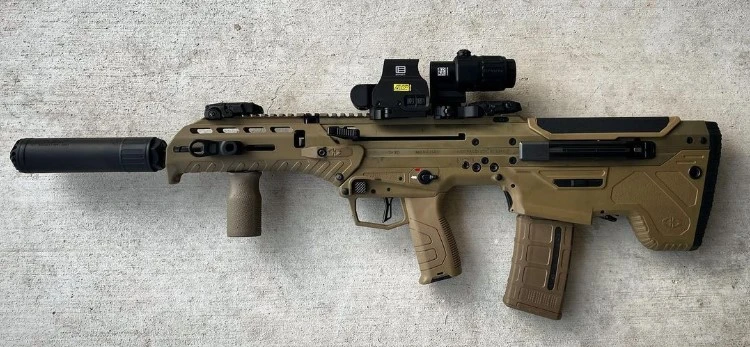
Credit: @texasplinking
Are SBRs Legal?
Yes! SBRs are legal to own for most citizens. Similar to suppressors, short-barreled rifles are categorized as “Class 3” (ATF speak for highly regulated) firearms by the NFA and ATF. You may be wondering, what is required to have an SBR? Factory-built short-barreled rifles require an SBR tax stamp and ATF Form 4 transfer, the same process as purchasing a silencer. You can also elect to build your own SBR by utilizing an ATF Form 1 - read more about Form 1 specifics.
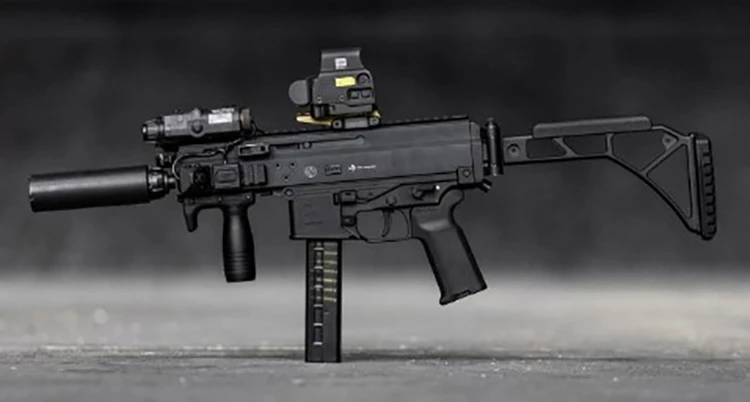
Credit: @deadairsilencers
Which States Allow SBRs?
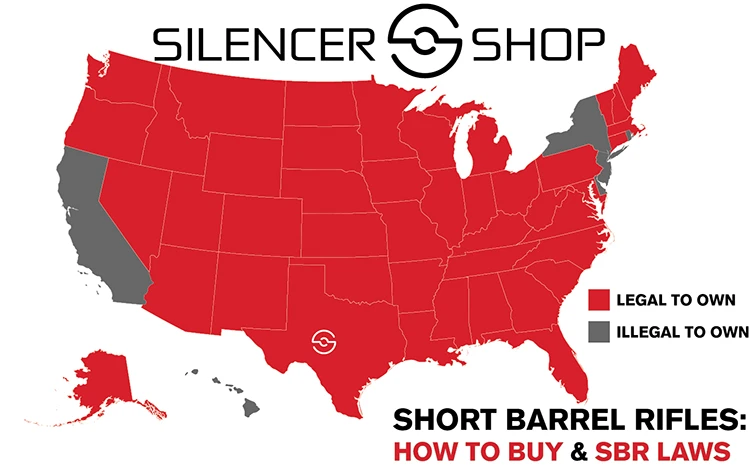
Nearly every state allows SBR ownership. As of 2/8/2023, 44 states across the country allow citizens to possess short barreled rifles. Many customers have asked, what states ban SBRs? The list of states where short barrel rifle laws are less friendly includes the usual suspects:
If you live in any other state, congrats! You can own an SBR as long as you meet the requirements set by the NFA. So, what are the requirements for an SBR? The NFA states owners must be at least 21 years of age, have a clean criminal record to not include any felony charges, and be a resident of the United States.
How to Build an SBR
Getting a custom AR15 SBR is simple with Silencer Shop.
Now, you can use the SBR Builder program to select your favorite Daniel Defense upper and lower receivers, add a tax stamp and Single Shot trust (if applicable), and let us handle the paperwork.
Our kiosk makes submitting your fingerprints simple, and our smartphone app lets you snap and upload a passport-style photo easily. In less than 5 minutes, you can have your fingerprints, photo, and demographic information ready . And your prints are good forever, so when you're shopping for your next SBR or silencer, you can check out right from your couch.
We take care of everything else:
- SBR lower receiver engraving
- Verifying your submission info
- Cleo Notification
Our Full Auto Pro software even simplifies the certification process. There has never been an easier way to get a custom short barrel rifle.
How to Buy an SBR
With Silencer Shop’s ATF eForm 1 service, filing for an SBR is easy.
- Login to your Silencer Shop account: if you don’t have one already you can quickly create one by selecting “Login” then “Register as a “New User”. From the Dashboard, go to “eForm 1” on the top banner and click the “Start New Form 1” button. You’ll then be prompted to choose whether your submission will be tax-exempt based on the ATF brace rule.
- You will need to enter a few pieces of information: about the firearm you’re applying for, including the original manufacturer, model, serial number, caliber or gauge, barrel length (in its SBR configuration), and overall length (in its SBR configuration).
- You will be asked to submit a photo of the engravings on your firearm; this is used to ensure accuracy on your form; this is not required by the ATF but is highly recommended.
- Once your information is input: a member of our compliance team reviews your application packet and checks it for accuracy (Silencer Shop compliance has a 99.5% accuracy rate compared to the industry average of 60%).
- Upon a successful compliance review: your eForm 1 will be prepped for submission. You will get an electronic document emailed to you, verify the info is correct and sign it. Then just keep an eye out for an email informing you that your eform1 is ready to certify.
- Certification can be done quickly and easily: at your home on your own computer or mobile device, just make sure to have your ATF eForms login and password ready!
Note: If you need any assistance, hovering over the “Need help” question mark (?) icons will provide useful information on how to fill out the indicated field.

How Long is the Wait to Buy an SBR?
The ATF states eForm 4 applications take 270 days, and eForm 1 applications take 30 days on average. With the recent ATF brace rule changes, these numbers may change, stay up to date on current processing times by checking out our ATF Wait Time Tracker.
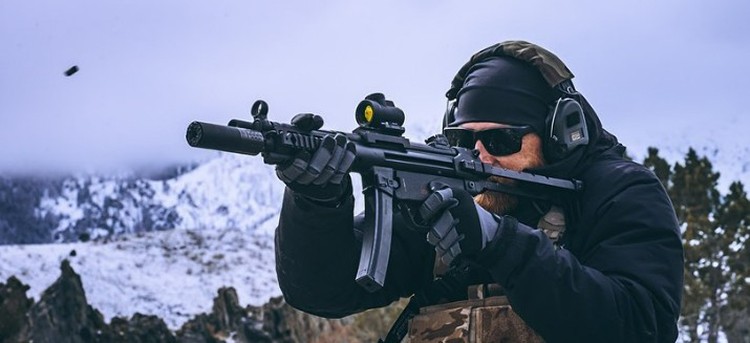
Credit: @1911syndicate
Can You Buy a Short Barrel Without a Tax Stamp?
You may have heard that the latest ATF pistol brace rule has a pistol brace amnesty period. The SBR tax stamp cost is usually $200, but during the forbearance period, the ATF will waive this fee for qualifying Form 1 SBR submissions through May 31, 2023 11:59 p. Silencer Shop's Form 1 service allows for tax-exempt filing and is the simplest solution to Form 1 your firearm into an SBR, but you must act fast. Get the latest eForm 1s by visiting our eForm 1 FAQs page.