
When most people think about suppressors, they think of sound reduction. But beyond making shooting quieter, suppressors also drastically reduce recoil, helping you shoot smoother, stay on target, and recover faster between shots.
Suppressors work by controlling the gas pressure that follows each bullet out of the barrel, preventing the sharp “kick” shooters feel after every round. Let’s break down how and why that works.
How Suppressors Reduce Recoil
Recoil happens because of Newton’s Third Law of Motion: every action has an equal and opposite reaction. When gunpowder ignites, expanding gases push the bullet forward and push the firearm backward into your shoulder or hands.
A suppressor changes that dynamic by:
- Capturing expanding gases within internal baffles.
- Allowing gases to cool and expand slowly, reducing the explosive jet that causes “kick.”
- Extending barrel length, increasing dwell time and redirecting energy away from the shooter.
This gas management dramatically reduces both rearward recoil and muzzle rise, improving control, comfort, and follow-up accuracy.
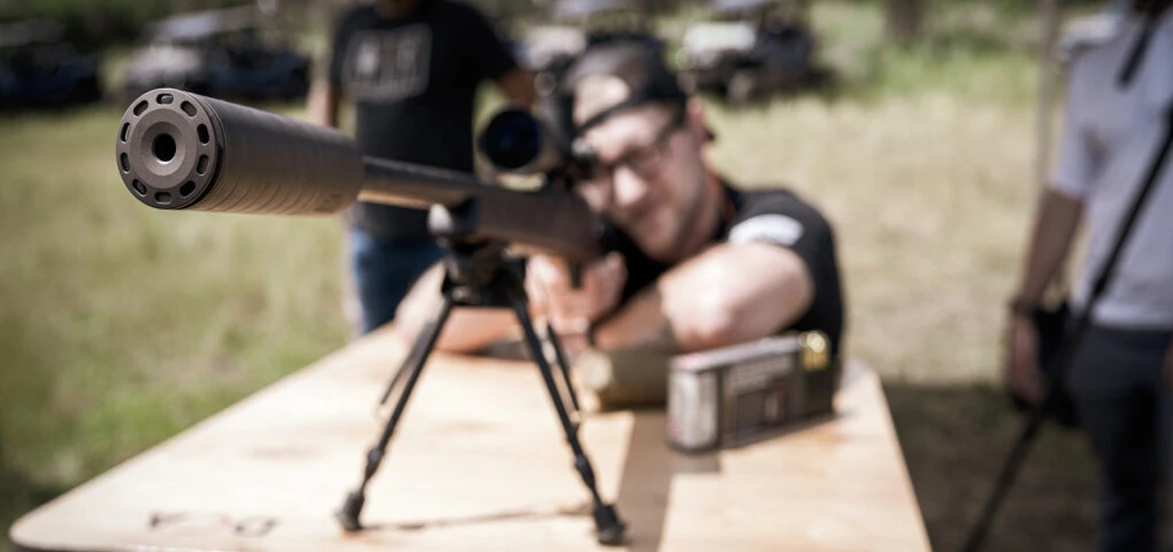
TABLE OF CONTENTS
Suppressor vs Muzzle Brake for Recoil Reduction
While both reduce recoil, they do it differently:
| Feature | Suppressor | Muzzle Brake |
| Primary Function | Reduces sound & recoil | Reduces recoil only |
| Noise Level | Quiet | Louder |
| Gas Direction | Contained and slowed | Redirected sideways |
| Best Use | Hunting, tactical, orindoor ranges | Precision rifles or open-range competition |
Summary:
- Muzzle brakes excel at pure recoil reduction but are extremely loud.
- Suppressors reduce recoil and noise, providing a balanced, more comfortable shooting experience.
If your priority is recoil reduction with sound suppression, the suppressor wins hands down.
Do Suppressors Improve Accuracy?
Yes, suppressors often improve accuracy by:
- Reducing shooter flinch caused by recoil or blast.
- Minimizing barrel whip through added forward weight.
- Decreasing muzzle rise, keeping your optic on target for faster follow-up.
However, there can be a minor point of impact (POI) shift when installing a suppressor. This is normal and consistent once zeroed, and rarely affects accuracy negatively.
How Much Recoil Does a Suppressor Reduce?
On average, a suppressor can reduce recoil between 20% and 40%, depending on caliber, ammunition type, and suppressor design.
Examples:
- A .308 rifle with a quality titanium suppressor may see a 35% reduction in felt recoil.
- A 9mm handgun may experience 20–25% less muzzle rise.
- Larger magnum rifles can feel like shooting a smaller caliber with a good brake-equipped suppressor.
Key takeaway: recoil reduction varies, but even at its minimum, it makes shooting smoother, faster, and more enjoyable.
Best Suppressors for Recoil Reduction
Some suppressors are purpose-built to tame recoil and muzzle climb. Here are Silencer Shop’s top picks, with your current product links retained:
SilencerCo Scythe Ti
Lightweight titanium build with an integrated single-port anchor brake that disperses gases laterally. Perfect for .30-cal and hunting setups.
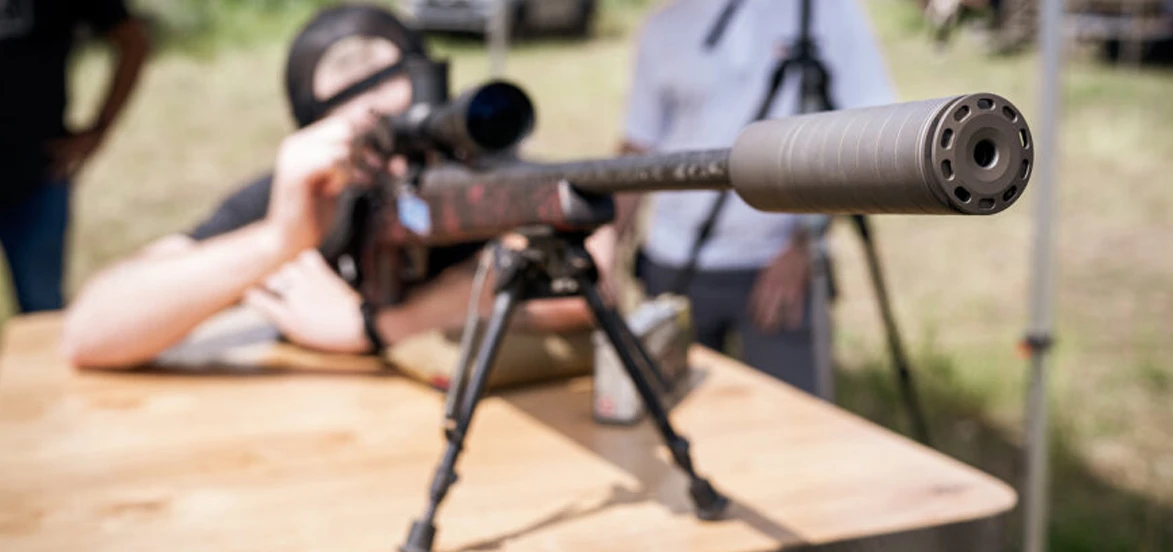
SilencerCo Omega 300
A benchmark in recoil control and durability. Multi-port anchor brake design makes it ideal for .308 and 6.5 Creedmoor rifles.
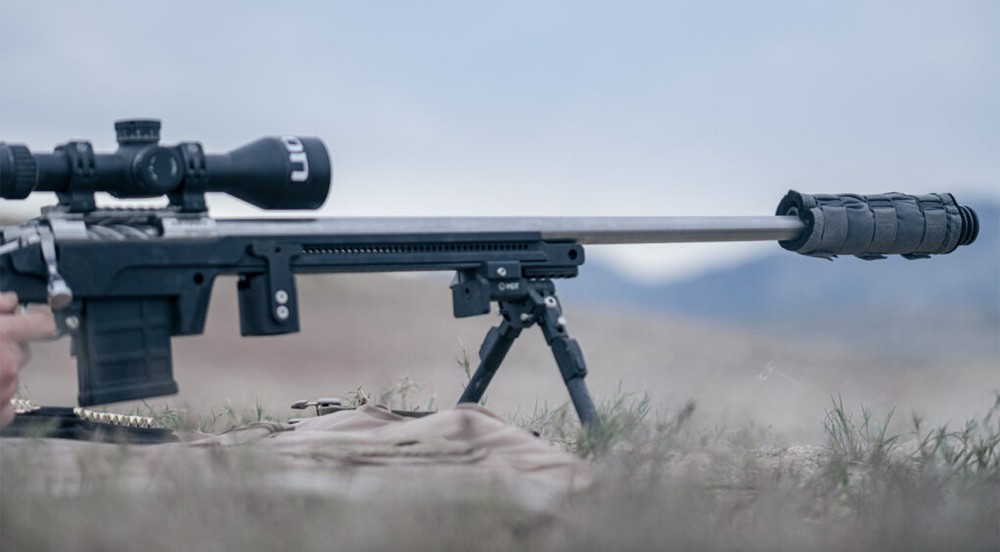
Dead Air E-Brake
Compatible with Nomad, Sandman, and Wolfman models. This omnidirectional brake accessory nearly eliminates muzzle rise.
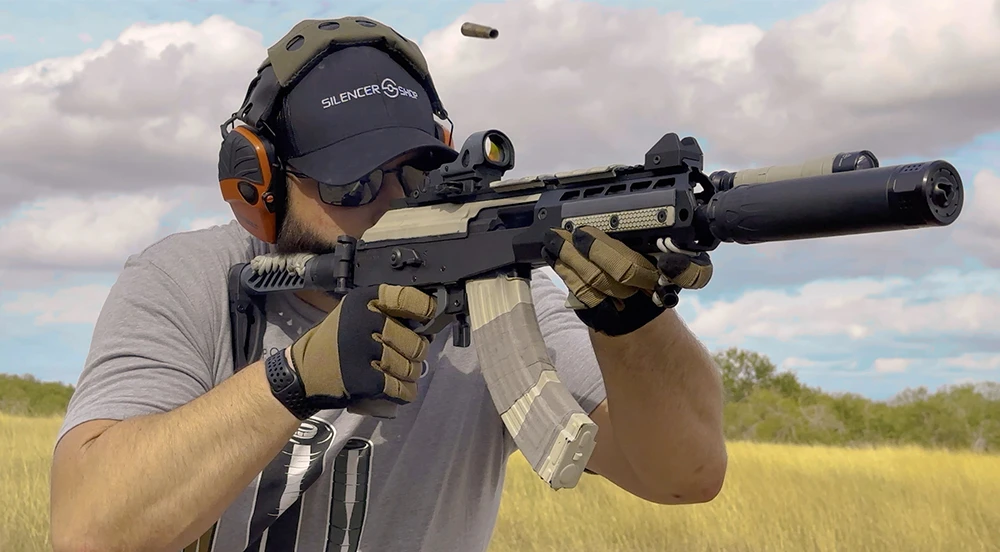
Daniel Defense SoundGuard
Uses tunable muzzle ports to direct gases outward and eliminate recoil while maintaining precision. Excellent for hunters and tactical shooters alike.

FAQ: Suppressors and Recoil Reduction
Q1: Do suppressors really reduce recoil?
A: Yes. Most shooters experience 20–40% less recoil, depending on the caliber and silencer design.
Q2: Does a suppressor reduce accuracy?
A: No. It usually improves consistency once the firearm is zeroed with the suppressor attached.
Q3: Do suppressors reduce muzzle rise?
A: Yes. By containing gas expansion, suppressors dramatically cut muzzle flip, especially noticeable in semi-autos.
Q4: Are suppressors better than muzzle brakes?
A: Suppressors reduce both sound and recoil. Muzzle brakes only handle recoil and are much louder.
Q5: How does a suppressor reduce recoil physically?
A: The baffle stack traps and cools combustion gases, spreading energy over a longer duration to minimize backward thrust.