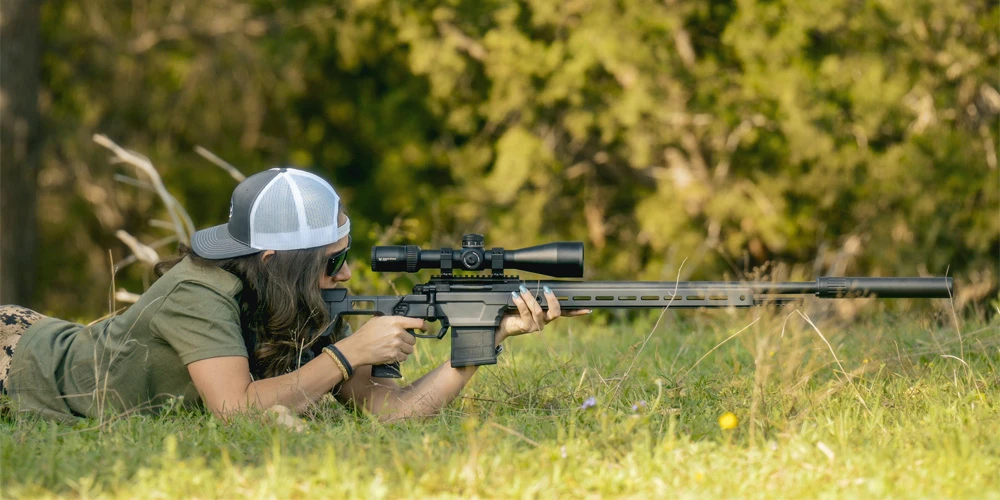

- Subsonic ammunition travels below the speed of sound (typically under 1,125 fps), reducing noise signature when paired with a suppressor.
- When hunting with subsonic rounds, you get the dual benefits of sound reduction and lower recoil, making them ideal for extended hunting sessions.
- Top subsonic calibers for hunting include .22 LR (small game), .300 Blackout (all-purpose), .308 (precision hunting), and .45-70 Government (large game).
- Subsonic ammunition offers an effective range of 50-150 yards, depending on caliber and ballistics, making them suitable for most typical hunting distances.
- Proper testing and ballistic data for your specific gun ensure consistent performance and placement.
Table of Contents
Hunting with Subsonic Ammunition: The Ultimate Guide
When you pair subsonic ammunition with a suppressor, you get one of the most effective combinations available for quiet, low-recoil hunting. Subsonic rounds travel below the speed of sound - typically under 1,125 feet per second at sea level - which means they don't create the supersonic crack that announces your position to game and everyone nearby. Unlike supersonic ammunition that creates a distinct transonic shockwave and louder report even with a suppressor, subsonic rounds allow suppressors to function at their full potential, reducing sound signatures to levels that make hearing protection optional for many shooters.
The Texas hog hunting anecdote that makes this article memorable: A good friend calls one Saturday asking about subsonic loads for his new .300 Blackout. He'd been struggling with standard loads, rounds snapping past 1,125 fps, generating sound issues on his property. Switched to subsonic, dropped a 200-grain projectile at about 1,000 fps through his suppressed rifle, and reported back that the difference was night and day - neighbors couldn't complain, game didn't spook from the blast, and recoil was manageable across multiple shots. That's what subsonic ammunition delivers.
This guide covers the essentials: what subsonic ammunition actually is, why it matters for hunting, which calibers perform best, and how to select the right rounds for your hunting situation.
Can You Use Subsonic Rounds for Hunting?
Yes - subsonic ammunition is not just legal for hunting, it's incredibly effective when paired with a suppressor. Most U.S. states allow subsonic hunting ammunition, and many hunters actively choose it over standard supersonic loads for the noise reduction and recoil management benefits alone. The key is matching your subsonic load to your hunting application: the right caliber, the right bullet weight, and the right suppressor work together to maximize effectiveness and minimize noise.


Subsonic vs. Supersonic Ammunition
Understanding the Difference
Subsonic ammunition is specifically loaded to travel slower than the speed of sound (below 1,125 fps at sea level), while supersonic ammunition exceeds that threshold, typically at 1,500+ fps depending on caliber.
The critical difference for suppressed hunting: supersonic rounds create a sonic boom - a transonic shockwave - that suppressors cannot eliminate. This shockwave is what you hear as a "crack" even with a suppressor in place. Subsonic rounds eliminate this shockwave entirely, allowing your suppressor to reduce the firing report to hearing-safe levels. For hunting, this means subsonic ammunition delivers both tactical stealth and the hearing protection benefit that makes extended hunting sessions more comfortable.
Benefits of Hunting with Subsonic Ammo
Reduced Sound Signature
Using ammo that moves slower and carries less energy might seem like a disadvantage for hunting, but subsonic ammo has many benefits that make it a great choice for hunters across the country.
- Sound Reduction
- Low Recoil
- Less Meat Loss
Sound Reduction
The obvious benefit of subsonic ammo is that it is a significant one.
Subsonic ammo is much quieter than supersonic ammo when shooting suppressed, so you can ditch the bulky and uncomfortable ear-pro without risking damaging your ears. Protecting your hearing is great, but that's not the only benefit of reduced sound.
Suppressed subsonic ammo is quiet, so it's hard for animals to locate the source. Shooting subs can improve your ability to cull multiple animals in a single sitting.
Here in Texas, for instance, where we have a huge problem with feral hogs, with a good silencer, good shot placement, and subsonic ammo, it's possible to eradicate pig after pig from the same group (called a "sounder") before spooking them.
Low Recoil
Subsonic loads use less gunpowder and create less energy, and thanks to Newton's laws of physics, you get less recoil.
Shooting a suppressed subsonic rifle is very mild. There is almost no recoil at all, which makes shooting more comfortable and more accurate. Reduced recoil and better accuracy are good improvements for anyone, but they're particularly beneficial to new hunters, smaller hunters, and anyone who's recoil-sensitive.
With the reduced recoil and near-total elimination of blast and concussion, suppressed subsonic shooting lowers the shooter's likelihood of flinching or messing up the fundamentals of firing a clean, accurate shot.
You're already fighting against your nerves and Buck Fever; you don't have to fight your rifle.
Less Meat Loss
Supersonic ammo is very violent on target, creating a stretched wound cavity and hydrodynamic shock of the tissue. It does not disintegrate a deer like some TV hosts would have you believe, but if you've ever butchered an animal, you can see the bloodshot, damaged meat around the bullet entrance and exit.
Subsonic ammo damages more like an arrow, where the damage is done by the projectile's mass and design -- not its speed. This means you harvest more meat and stock the freezer with a few extra pounds of venison or pork.
Minimal Recoil
Subsonic loads generate significantly lower recoil than standard ammunition. The slower projectile velocity and typically heavier bullet weights mean less felt recoil per shot. For hunters taking multiple shots or those sensitive to recoil, this is a major advantage. You maintain better sight picture between shots, experience less shoulder fatigue on hunting trips, and can shoot more accurately when it matters.
Consistent Trajectory for Hunting Distances
Subsonic ammunition maintains consistent ballistics across typical hunting distances (50-150 yards depending on caliber). You don't get the velocity drop-off concerns that plague longer-range supersonic hunting. This is especially true for the heavier bullet weights used in subsonic loads, which are specifically engineered for subsonic speeds and deliver reliable terminal performance within appropriate hunting ranges.
Terminal Performance
Subsonic ammunition is engineered specifically for the velocity ranges at which it operates. Manufacturers load quality subsonic rounds with bullet designs that expand and penetrate reliably at subsonic speeds. This is why major ammunition makers produce dedicated subsonic hunting loads - they understand that terminal ballistics change below 1,125 fps and design accordingly. Cheap or reloaded subsonic ammunition without proper load development can underperform, so source ammunition from reputable manufacturers like Hornady, Federal, or similar.
Best Subsonic Hunting Calibers
.22 Subsonic LR
The .22 LR is inherently subsonic - even standard factory loads travel around 1,000 fps. It's ideal for small game hunting (squirrels, rabbits, small varmints) and offers excellent sound reduction. Paired with a .22 suppressor, .22 subsonic delivers the quietest suppressed rifle option available. Effective range is approximately 50-75 yards for clean, ethical hunting. The trade-off is limited power - not suitable for anything larger than small game. Recoil is minimal, making it excellent for younger or recoil-sensitive hunters.
.300 Blackout (Best All-Around Subsonic Caliber)
The .300 Blackout was specifically designed for subsonic performance. Subsonic .300 BLK loads typically travel 900-1,000 fps with 200+ grain bullets, offering excellent ballistics for medium game and general hunting applications. Effective range is approximately 150 yards for ethical hunting placement. Recoil is moderate and manageable. The .300 Blackout dominates the subsonic hunting market because it delivers the best balance of power, accuracy, range, and sound reduction. Suppressed .300 BLK is hearing-safe and provides serious hunting capability.
.308 Winchester Subsonic
The .308 (7.62x51mm NATO) can be loaded subsonic, though ammunition availability is more limited than .300 Blackout. Subsonic .308 loads typically use heavy 220-grain bullets at 900-1,000 fps. This gives you the larger caliber benefit with moderate sound reduction. Effective range is approximately 100-150 yards depending on load development and ballistics. The .308 is a good option if you already own a .308 rifle and want to experiment with subsonic hunting, but it's not the first choice for dedicated subsonic platforms. Ammunition selection matters significantly here.
8.6 Blackout (Larger Game Option)
The 8.6 Blackout was designed specifically to push heavier projectiles subsonic - loads use .338 caliber bullets at 900-1,000 fps, delivering more power and penetration than .300 BLK. It's the choice for medium-to-large game hunting where you want subsonic stealth with .338-class power. Effective range is approximately 150-200 yards depending on load and target. Recoil is noticeable but manageable. The 8.6 Blackout is newer, so ammunition availability is more limited than .300 BLK, but the performance for larger game is superior.
.45-70 Government Subsonic
The .45-70 Government is an excellent option for hunters pursuing larger game with subsonic ammunition. Subsonic .45-70 loads are loaded with heavy 300-350 grain projectiles at 800-1,000 fps, delivering substantial power and penetration. This caliber excels for elk, moose, and large game hunting where subsonic capability is desired but you need serious hitting power. Effective range is approximately 150-200 yards for ethical placement. Recoil is significant, so this caliber suits experienced hunters comfortable with larger-frame rifles. Ammunition availability is better than 8.6 Blackout due to .45-70's established hunting reputation, but subsonic options are still more limited than .300 BLK.
.375 Raptor
The .375 Raptor is a specialty subsonic caliber designed to function reliably in direct impingement AR-platform rifles. Loads travel around 900-1,000 fps with .375 caliber bullets. It occupies a middle ground between .300 BLK and 8.6 Blackout in terms of power and ballistics. Effective range is approximately 150 yards. This is a niche option for shooters who want a dedicated subsonic AR platform but prefer different ergonomics than 8.6 Blackout. Ammunition is scarce and typically requires hand-loading or specialty sources.


Conclusion
Subsonic ammunition represents one of the most effective approaches to quiet, low-recoil hunting available today. When you pair quality subsonic loads with a properly suppressed rifle, you get the noise reduction, recoil management, and hearing safety that make extended hunting sessions practical and enjoyable. The .300 Blackout remains the best all-around subsonic caliber for most hunters, delivering the ideal balance of power, range, and availability. But depending on your game, rifle platform, and hunting situation, any of these calibers can deliver effective subsonic performance.
The key takeaway: don't assume subsonic means wimpy or limited. Modern subsonic ammunition, when properly loaded and matched to appropriate hunting distances, delivers ethical killing power and terminal performance. Test your specific loads in your rifle, understand your ballistics at distance, and you'll find subsonic hunting not just effective but often quieter and more enjoyable than traditional supersonic hunting.
If you're new to suppressed hunting, our guide on how to buy a silencer walks through the process from start to finish. And if you're looking for the right suppressor for subsonic hunting, our rifle suppressors guide covers options optimized for different calibers and applications.
Frequently Asked Questions
What exactly is subsonic ammunition?
Subsonic ammunition is loaded to travel below the speed of sound - typically under 1,125 feet per second at sea level. Unlike standard supersonic ammunition, subsonic rounds don't create a sonic boom or transonic shockwave, allowing suppressors to reduce sound to hearing-safe levels. Subsonic loads typically use heavier bullets at lower velocities to maintain ballistics and terminal performance.
What is the difference between subsonic and supersonic ammunition?
Subsonic ammunition travels below 1,125 fps and doesn't create a sonic boom, while supersonic ammunition exceeds that threshold and generates a distinct shockwave that suppressors cannot eliminate. When suppressed, subsonic ammunition is hearing-safe; supersonic ammunition remains at 150+ dB even with suppression. For hunting, subsonic provides stealth and noise reduction; supersonic offers higher velocity and longer effective range.
What's the effective range of subsonic ammunition for hunting?
Effective range depends on caliber. .22 LR subsonic is effective to 50-75 yards for small game. .300 Blackout subsonic is effective to approximately 150 yards for medium game. Larger calibers like 8.6 Blackout and .45-70 Government subsonic extend to 150-200 yards. These ranges assume proper bullet placement and appropriate hunting scenarios. Always know your ballistics and match your ammunition to your intended hunting distance.
Which subsonic caliber is best for hunting?
The .300 Blackout is the best all-around subsonic hunting caliber. It delivers the best balance of power, range (approximately 150 yards), availability, and sound reduction. For small game, .22 LR subsonic is ideal. For larger game, 8.6 Blackout or .45-70 Government subsonic provide more power. Choose based on your game target and rifle platform.
Can I hunt with subsonic ammunition?
Yes - subsonic ammunition is legal for hunting in most U.S. states and is widely used by hunters specifically for its noise reduction and recoil management benefits. Always check your local hunting regulations for any specific ammunition restrictions, but subsonic hunting ammunition is considered standard and ethical across North America.
How fast is subsonic ammunition?
Subsonic ammunition typically travels 800-1,000 feet per second depending on caliber and load. The definition of subsonic is anything below 1,125 fps at sea level. Manufacturers carefully engineer subsonic loads to maintain reliable ballistics and terminal performance within this velocity range.
Do I need a suppressor to use subsonic ammunition?
Technically no - subsonic ammunition works in any rifle chambered for that caliber. However, the primary benefit of subsonic ammunition - sound reduction - is realized only when paired with a quality suppressor. Without suppression, subsonic ammunition produces a similar report to regular ammunition because the mechanical action and suppressor design determine most of the sound. For hunting purposes, pairing subsonic with suppression is the standard approach.
What's the quietest suppressed rifle caliber for hunting?
The .22 LR is the quietest suppressed rifle caliber available, producing hearing-safe sound levels with even modest suppressors. If you want more power than .22 LR but still maximum quiet, the .300 Blackout paired with a high-quality suppressor delivers hearing-safe subsonic performance across hunting scenarios. Sound levels depend on specific suppressor design, ammunition load, and environmental factors, but subsonic .22 and .300 BLK represent the quietest practical hunting options.